
Bringing quality education closer to underserved communities.
Establishing satellite campuses in low-income areas reduces transportation barriers, increases attendance, builds community connection, and provides applied learning opportunities for students of all ages.
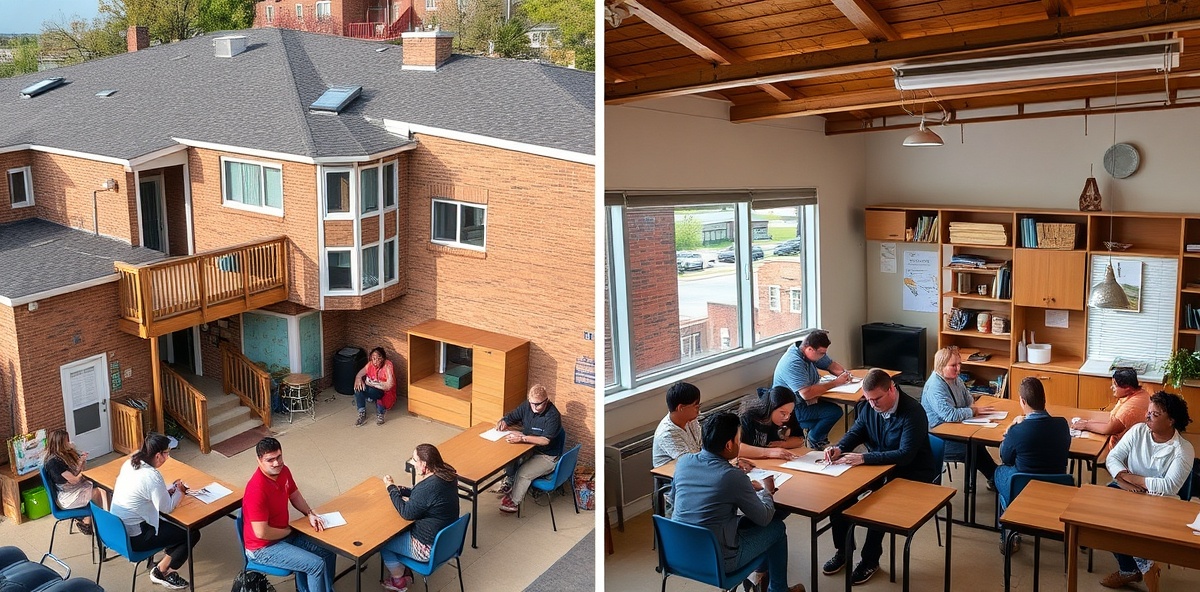
Education should be accessible to all students, regardless of where they live or their family's economic circumstances. The Satellite Campus Proposal recognizes that students in low-income and impoverished areas face unique barriers—including transportation challenges, limited access to quality educational resources, and reduced community connection to schools.
By establishing satellite campuses in or near low-income communities—such as on the grounds of apartment complexes or partnering businesses—we can bring school closer to students. This reduces the need for daily transportation, increases attendance, strengthens parent-teacher relationships, and creates a genuine community learning environment.
For high school students, satellite campuses can be co-located with partnering businesses, creating a business-like environment where students engage in applied learning while working in real workplaces. This bridges the gap between classroom and career, giving students practical experience and a pathway to employment.
Smaller footprint campuses established in low-income neighborhoods, often on the grounds of apartment complexes or community centers. These schools serve younger students (K-8) and prioritize community connection and accessibility.
Specialized satellite campuses co-located with partnering businesses and employers. High school students engage in applied curriculum while working in real professional environments, integrating education with career development.
Students can walk or have short commutes to school, eliminating transportation barriers and the associated costs. This is especially important for families without reliable transportation options.
Reduced transportation and closer proximity to home increases daily attendance rates. Students miss fewer days, resulting in better academic outcomes.
Satellite campuses become true community schools. Parents and teachers build stronger relationships, families feel welcomed, and the school becomes a neighborhood hub.
Business-based satellite campuses allow students to work in actual professional environments, gaining practical skills and experience that directly translates to employment.
Smaller satellite campuses allow for more personalized attention and tailored instruction. Teachers know their students and families better.
Students graduate with job experience, industry certifications, and employer connections—ready to enter the workforce or pursue further education.
Satellite campuses, especially business-based models, attract investment and business partnerships to neighborhoods. They create jobs, generate local economic activity, and position communities for long-term prosperity.
Quality schools signal investment in neighborhoods and encourage community pride. Satellite campuses in low-income areas demonstrate commitment to these communities and can serve as catalysts for broader revitalization efforts.
Satellite campuses become hubs for community services. Families accessing the school gain connections to healthcare, social services, and support resources. The school becomes a trusted community institution.
Business-based satellite campuses create authentic partnerships between schools and employers. Businesses gain access to skilled workers trained for their needs, while students gain employment opportunities.
Satellite campuses in underserved areas reduce systemic inequities. Every student, regardless of where they live or their family's economic status, has access to quality education and career pathways.
Establish K-8 satellite campuses on the grounds of affordable housing complexes. The school becomes part of the residential community, making education immediately accessible to residents.
Co-locate satellite campuses with community centers and neighborhood facilities. The school operates from a familiar, accessible community space.
Co-locate 9-12 satellite campuses with partnering businesses and employers. Students combine classroom learning with hands-on work experience in professional environments.
Create satellite campuses that serve as educational and community hubs, offering K-12 programs, adult education, family services, and community programming all in one location.
EXAMPLE 1: K-8 SATELLITE
Located at a 200-unit affordable housing complex, serving 300 K-8 students from the immediate neighborhood. Walking distance for most families. Offers before/after school care, meals, and family support services. 95% attendance rate.
Community-centered, family engagement focused
EXAMPLE 2: 9-12 SATELLITE
Located at a partnering e-commerce business hub. 150 high school students split time between classes and work on real projects. Students earn money while learning digital retail, customer service, and business operations.
Applied learning, career-ready graduates
EXAMPLE 3: K-8 SATELLITE
Co-located with neighborhood community center. Serves 250 K-8 students. Integrated with after-school programming, sports, arts, and family services. Evening adult education programs in same facility.
Multi-purpose community hub
EXAMPLE 4: 9-12 SATELLITE
Located at manufacturing facility. 100 students in advanced manufacturing program. Learn on actual production equipment, earn industry certifications, work part-time, and graduate with job offers from employer partner.
Industry partnership, employment ready
The Satellite Campus Proposal is about ensuring that every student in Escambia County, regardless of their zip code or economic circumstances, has access to quality education and career opportunities. By bringing school to communities and connecting learning to work, we create pathways to success for all students.
Share Your Thoughts